MOON BAG RUFFLE


FROM TRASH TO TREASURE
Our Main Materials
Every GOT BAG product is made from one of our three main materials: RE:NYNET®, crafted from discarded fishing nets, RE:PET®, made from collected PET bottles, or RE:PC®, produced from discarded water dispenser containers. Whenever possible, we use recycled materials such as recycled polyester for other product components, including linings, buckles, and zippers—although some virgin materials are still used where necessary. Here you’ll find an overview of our three main materials and learn more about their journey from waste to finished product.
Learn more about the processing process:

RE:NYNET®
RE:NYNET® is a recycled nylon fabric made from discarded fishing nets. Our Taiwanese partner sources these discarded nets from fishing operations in Vietnam. In a sophisticated recycling process, the nets are chemically broken down into their original molecular components, which are then used to create new yarn. The resulting yarn offers the same high-quality properties as virgin nylon. We use RE:NYNET® for products that benefit from its lightweight feel, soft touch, and vibrant colors.
Vietnam
RE:NYNET® is made from discarded fishing nets. We source this material from Vietnam through our partner in Taiwan, who has many years of experience processing fishing nets. By collecting nets that are no longer usable, they provide fishing companies with a free and responsible disposal solution.
Taiwan
As soon as the collected nets arrive at our specialized recycling partner in Taiwan, they undergo a meticulous, multi-stage preparation process. They are first thoroughly cleaned, precisely sorted, and mechanically shredded to guarantee maximum material purity. From the high-quality regenerated nylon obtained, a completely new, robust yarn is subsequently spun.
Supplier Certificates: OBP, GRS
Taiwan
Using the spun yarn, our fabric manufacturer first creates a lightweight and durable 70D nylon fabric.
Finishing & Coating: The raw fabric is then dyed and finished with a thin, water-repellent PU coating on the outside.
Responsibility & Environment: Our fabric supplier operates according to an independently audited chemical and production standard. The special feature of this standard is that it does not only test the finished fabric, but assesses every chemical used before it is applied. Substances that do not meet the criteria are not introduced into production in the first place. The standard also sets limits for wastewater and air emissions and requires regular on-site audits covering workplace safety and resource use.
Supplier Certificates: OBP, GRS
Vietnam and Indonesia
In the Ho Chi Minh City region of Vietnam, our production partner handles the precise cutting and final assembly. This is where our RE:NYNET® material unfolds its full potential: we specifically use it for products that need to be exceptionally soft and lightweight, yet highly durable.
For all other components, from inner linings and buckles to zippers, we work with specialized suppliers. Wherever possible, we use recycled materials, while ensuring that all materials meet our high quality standards.
Supplier Certificates: OBP, GRS
Germany
Once manufacturing is complete, our products travel via cargo ship to Germany. Their destination is our central warehouse in the Rhine-Main region. From there, we manage the entire logistics process: here, items are stored, carefully picked for each individual order, and finally shipped out to our customers.
We use RE:NYNET®, among others, in the following products:


RE:PET®
RE:PET® is our recycled polyester fabric. It is made from PET bottles collected through the clean-up program of our partner foundation GOT BAG Indonesia, which collects plastic waste together with local communities on Java. If the collected amount of PET is not sufficient for a production batch, we purchase additional PET through our recycling partner. This PET is certified as Ocean Bound Plastic, meaning plastic waste from coastal areas without functioning waste management systems.
Indonesia
Collection takes place where the waste is generated: in villages and households in Java’s coastal regions where no regulated waste management systems are in place. This is complemented by plastic collected from beaches, rivers, mangrove forests, and the ocean – including plastic brought back to shore by fishermen who retrieve it in their nets. Our partner foundation GOT BAG Indonesia compensates for all types of plastic, not only the easily recyclable PET.
Indonesia
Subsequently, the valuable PET components are precisely separated from other plastics to guarantee a consistently high material quality. Only exactly matching PET fractions proceed to further processing – this ensures the necessary purity and stability for subsequent yarn production. Whenever possible, we direct all other mechanically recyclable types of plastic to meaningful recycling solutions. Non-recyclable plastic is handed over for thermal recovery.
Indonesia
The collected and pre-processed PET bottles travel further to our recycling partner. Here, the material undergoes a precise refinement process: it is shredded, intensively washed, dried, melted, and filtered before being extruded into high-quality rPET pellets. In addition to the bottles from GOT BAG Indonesia's clean-up program, we source PET through our recycling partner that is officially certified as Ocean Bound Plastic.
Supplier Certificates: OBP, GRS
Taiwan
The rPET pellets are melted down and then formed into fine polyester fibers through spinnerets. These fibers are spun, creating a uniform, resilient yarn that forms the ideal foundation for our RE:PET® fabrics.
Supplier Certificates: OBP, GRS
Taiwan
Our fabric manufacturer processes the yarn into fabrics whose structure and material thickness are precisely tailored to the later product – such as backpacks or bags. Directly after weaving, the fabric is dyed under strictly controlled environmental and safety standards. Our partner consistently ensures a responsible use of chemicals as well as resource-efficient production. Finally, the fabric receives a water-repellent PU coating. For our ROLLTOP 2.0 models, we apply an additional thin, protective TPU layer.
Supplier Certificates: OBP, GRS
Vietnam and Indonesia
In Vietnam and Indonesia, the RE:PET® fabrics are shaped and manufactured into our backpacks and bags.
A special feature: for maximum water resistance, we weld the seams of our ROLLTOP 2.0 models using specialized machines instead of sewing them. This reliably protects the contents even during heavy rain and extended outdoor activities.
Supplier Certificates: OBP, GRS
Germany
Following successful manufacturing, the products begin their journey to Germany via cargo ship. At our central warehouse, we store and carefully pick the items until they finally make their direct way to our customers.
We use RE:PET®, among others, for the following products:


MOON BAG SMALL


MOON BAG LARGE


ROLLTOP 2.0


PRO PACK

RE:PC®
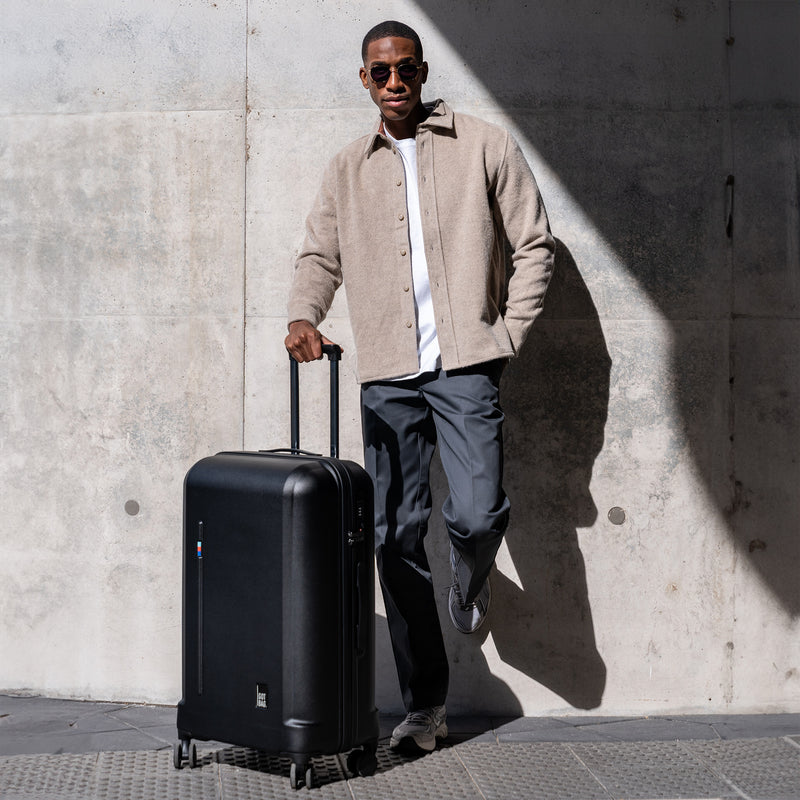
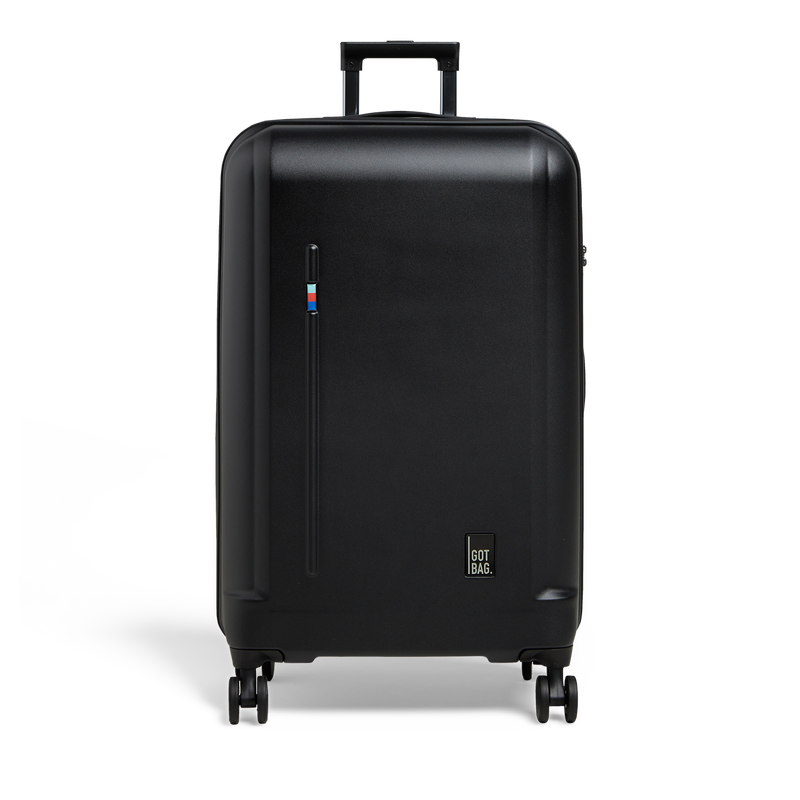
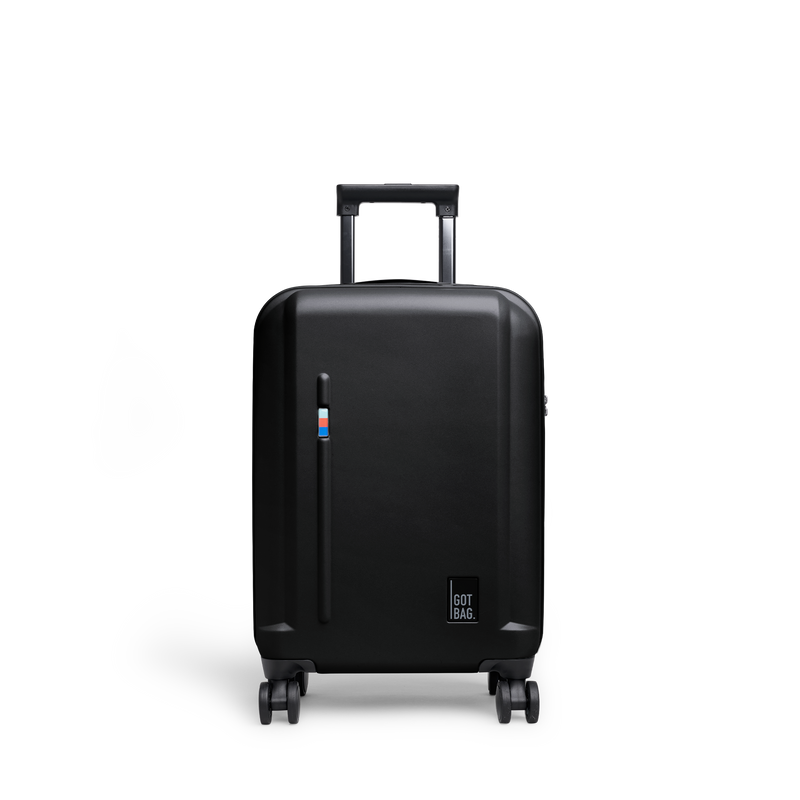
RE:PC® is a recycled polycarbonate sourced from discarded water dispenser containers. Because this type of plastic is not typically found in the coastal waste collected through the clean-up program of GOT BAG Indonesia, we look further. By collaborating with a specialized recycling partner on-site, we actively utilize valuable resources outside the clean-up program to craft durable companions.
Indonesia
If you have already been to regions like Southeast Asia, you probably know that drinking water often comes from water dispensers with reusable containers. Despite their reusability, these containers eventually reach the end of their life cycle. Therefore, we collect them and other end-of-life products made of polycarbonate (PC) as the base for our RE:PC®.
Indonesia
First, foreign plastics and labels are removed from the bottles. Then, they are shredded into small pieces, so-called flakes, in large mills. The flakes are then washed and cleaned.
Supplier Certificates: GRS
Indonesia
The material is melted down, filtered, and processed. Afterwards, the plastic mass is extruded and processed into small pellets (granulate). This creates recycled polycarbonate with consistent quality.
Supplier Certificates: GRS
China
The granulate is processed via an extruder into plastic webs with up to 3 layers (outer, core, inner) and cut into sheets. The sheets are then heated and vacuum-formed over the suitcase molds.
Supplier Certificates: GRS
China
The molded plastic shells are combined with other components such as hinges, wheels, or other parts.
Supplier Certificates: GRS
Germany
This turns waste into lightweight and durable products such as eyewear frames or suitcase material. The finished products are transported by ship to Germany and stored in our warehouse until they are shipped to our customers.
We use RE:PC®, among others, in the following products:

RE:SHELL CABIN