
CLOUD BEAD BAG


Supply Chain
There's more behind each of our products than meets the eye: resources, dedicated partners, and complex manufacturing processes before it reaches you. We would like to offer you a transparent insight into this journey: Who are our key suppliers (Tier 1)? How are our products made and transported? And where do the main materials come from?

OUR STANCE
Every purchasing decision directly impacts people and ecosystems. That's why we look closely at our entire supply chain: assessing social standards and environmental risks through a holistic due diligence approach, taking responsibility and driving positive change. Transparency doesn't happen by chance: from the finished backpack to the yarn, we know each of our partners personally. We believe real progress only happens together through long-term relationships built on mutual respect, open dialogue, and a shared commitment to improving living and environmental conditions, step by step.
Clear Principles. Honest Partnerships.
A product is only as good as the conditions under which it is made. Our Code of Conduct provides a reliable framework for this. It is aligned with the United Nations Universal Declaration of Human Rights, the Core Conventions of the International Labour Organization (ILO) , and the UN Sustainable Development Goals (SDGs). In doing so, we follow a simple principle: wherever our standards differ from local legislation, the higher standard that best protects people and the environment shall always apply.
Forced labor of any kind as well as acts of human trafficking are strictly prohibited. All employees must be free to choose their employment and to terminate it subject to statutory regulations and notice periods. Employers are not permitted to retain or deposit identity documents to restrict free movement.
No person shall experience discrimination in regard to any aspect of employment based on ethnicity, religion, gender, age, sexual orientation, or any other protected classification. Every employee deserves respect and dignity; physical, sexual, psychological, or verbal harassment will not be tolerated at any time.
The employment of children under the age of 15 or under the age of compulsory education will not be tolerated under any circumstances. Partners must maintain special protection and control systems for young workers below the age of 18 and grant them opportunities to participate in education and training.
All partners shall acknowledge and support employees' rights to freely found or join representative organizations and engage in collective bargaining. Effective grievance mechanisms designed to resolve internal differences and handle complaints must be installed at all facilities.
Wages must be sufficient to meet the basic needs of workers and their families and provide a discretionary income by meeting and exceeding minimum wage requirements. Overtime hours must be compensated at the legally required rate or at a rate exceeding regular hourly wages.
A regular work week shall not exceed 48 hours, and total hours including overtime must not sum up to more than 60 hours per week. Employers must grant workers at least 24 consecutive hours of rest every six-day period , and overtime work must always be consensual.
Partners shall take precautionary measures to identify, assess, and minimize potential risks to prevent occupational illnesses and workplace accidents. We demand a safe and hygienic working environment, including appropriate insurance or support systems for accidents, illness, and maternal leave.
Suppliers must comply with environmental laws and continuously minimize their negative impacts on nature , which includes removing hazardous chemicals according to REACH regulations.

Amfori BSCI (Business Social Compliance Initiative) is a comprehensive program that aims to identify, evaluate, and mitigate social risks within supply chains.
Amfori BSCI enables us to fulfill ESG due diligence obligations, increase transparency, and address significant violations of working conditions within the framework of international labor law standards.
Our Main Materials
Warehouse


Recycler


Production partner


Clean-Up


Headquarter


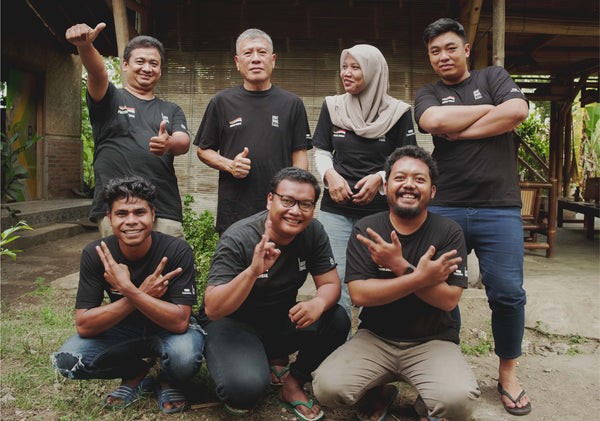
Stiftung Yayasan GOT BAG Indonesia office, in Yogyakarta, Indonesia
Coordination and implementation of the clean-up program
Our partner foundation Yayasan GOT BAG Indonesia operates a clean-up program where plastic waste is collected. In addition, the foundation focuses on education and the expansion of the waste management system to comprehensively address the problem of ocean plastic pollution. We are in regular exchange with the eight full-time employees of GOT BAG Indonesia. Our Lead of Mission Leonie visits the organization several times a year to work closely with the Indonesian team and the collecting communities. She reviews progress and makes decisions about additional projects together with the team.
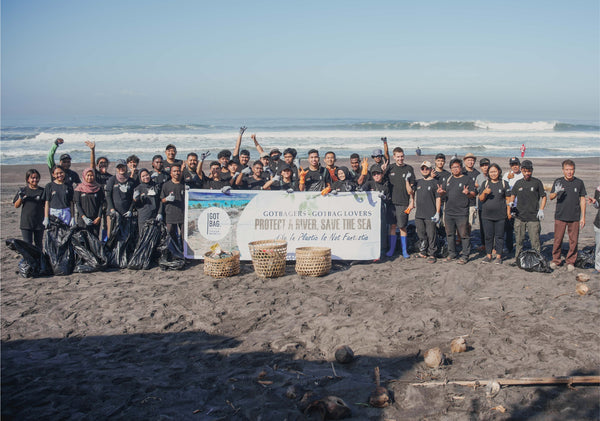
Clean-up communities, in Bantul, Indonesia
Plastic waste collection
The clean-up program was started in Demak on the north coast of Java. This Indonesian region is located at the mouth of several rivers that transport large quantities of plastic waste from the island's mainland into the sea. GOT BAG Indonesia has now expanded its program to the regions of Jepara in the north and Bantul on the south coast. The clean-up program includes fishers and other collectors who gather plastic from the sea, mangrove areas, and coastal regions such as river deltas. Residents who do not have access to functioning waste management systems can also dispose of their household plastic waste at the collection points. In addition, we source plastic bottles for the production of our backpacks from our recycling partner's plastic collection network, which is Ocean Bound Plastic certified.
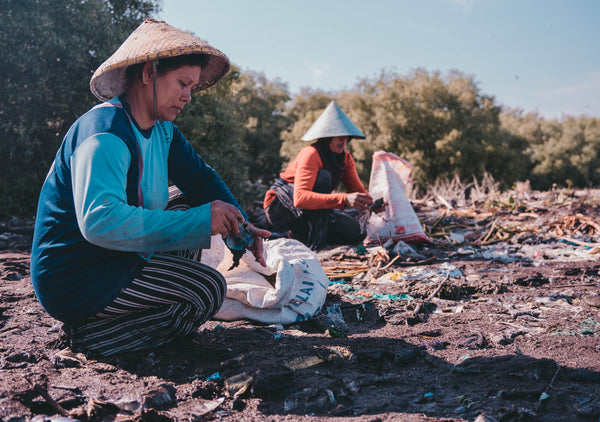
Clean-up-Communities, in Demak, Indonesia
Plastic waste collection
The clean-up program began in Demak on the north coast of Java. This Indonesian region is located at the mouth of several rivers that transport large amounts of plastic waste from the island's mainland into the sea. GOT BAG Indonesia has now expanded its program to the regions of Jepara in the north and Bantul on the south coast. The clean-up program includes fishers and other collectors who gather plastic from the ocean, mangrove areas, and coastal regions such as river deltas. At the collection points, locals who do not have a functioning waste management system can also dispose of their household plastic waste. In addition, we rely on our recycling partner's plastic collection network, which is Ocean Bound Plastic certified.
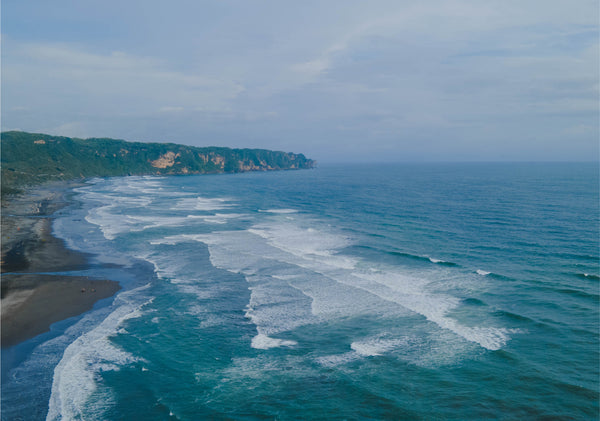
Clean-up communities, in Jepara, Indonesia
Plastic waste collection
The clean-up program began in Demak on the north coast of Java. This Indonesian region is located at the mouth of several rivers that transport large amounts of plastic waste from the island's mainland into the sea. GOT BAG Indonesia has now expanded its program to the regions of Jepara in the north and Bantul on the south coast. The clean-up program includes fishers and other collectors who gather plastic from the sea, mangrove areas, and coastal regions such as river delta areas. At the collection points, locals who do not have a functioning waste management system can also dispose of their household plastic waste. In addition, we rely on our recycling partner's plastic collection network, which is Ocean Bound Plastic certified.
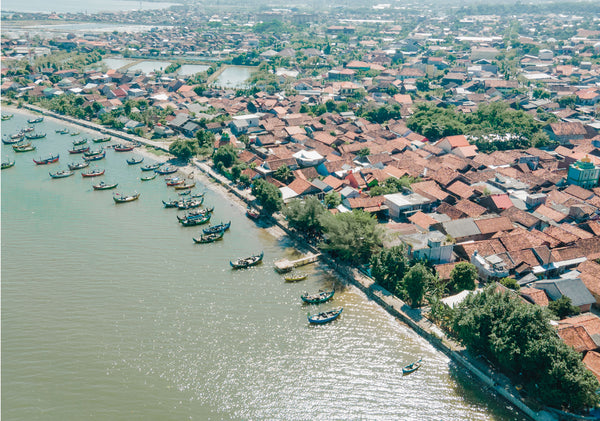
Warehouse in Jepara, Indonesia
Sorting, cleaning, baling and storage of plastic waste
All recyclable types of plastic (e.g., PET, PP, HDPE, LDPE) that have been handed in by collectors in the communities are then brought to the foundation's warehouse in Bantul or Jepara. There, employees manually sort the material by specific plastic types and colors and remove labels and caps. The sorted and processed plastic is then pressed into cube-shaped bales in a machine. These are then transported to corresponding partners in the region for mechanical recycling.
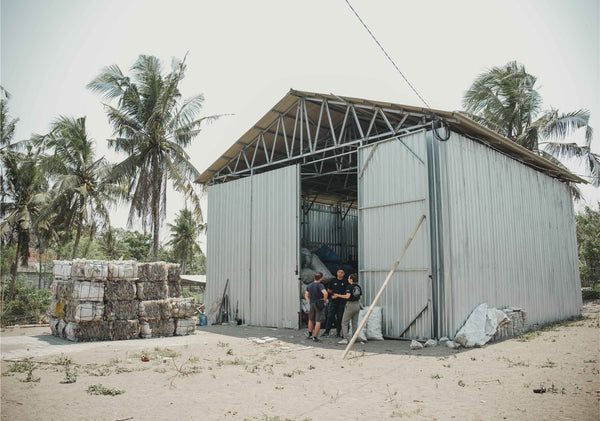
Warehouse in Bantul, Indonesia
Sorting, cleaning, baling and storage of plastic waste
All types of recyclable plastic (e.g., PET, PP, HDPE, LDPE) handed in by collectors in the communities are then brought to the foundation's warehouse in Bantul or Jepara. There, employees sort the material manually according to specific plastic types and colors and remove labels and caps. The sorted and processed plastic is then pressed into cube-shaped bales in a machine. These are then transported to corresponding partners in the region for mechanical recycling.
PET Recycling Partner Surabaya, on Java, Indonesia
PET recycling for the production of RE:PET material
PET bottles collected and processed by GOT BAG Indonesia's collection communities are sent to our recycling partner in Surabaya. Here, the material is shredded, washed again, dried, melted, filtered, and extruded into rPET pellets. In addition to the PET bottles collected by the clean-up program, we also source Ocean Bound Plastic certified PET through our recycling partner on Java.
Certificates: Ocean Bound Plastic, Global Recycled Standard
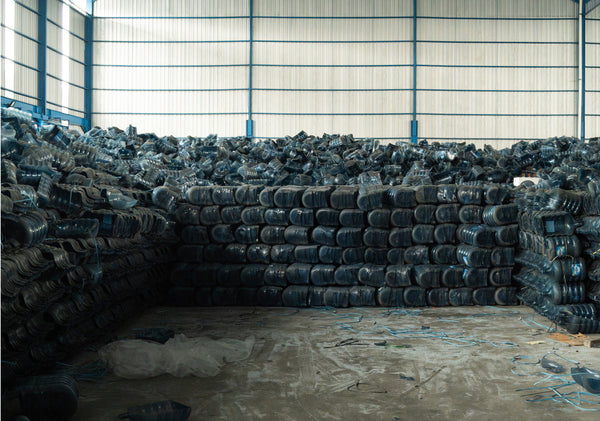
RE:PC Recycler, on Java, Indonesia
Source for recycled polycarbonate
RE:PC is recycled polycarbonate material made from discarded water dispenser containers. These containers are not collected through the GOT BAG Indonesia clean-up program, as an exchange system usually exists for these containers. Therefore, we source these materials from our recycling partner in Indonesia, who collects the containers within a maximum radius of 50 km from the coast from restaurants or companies that use water dispenser stations. The recycled polycarbonate we use for our RE:PC is Ocean Bound Plastic certified and is a very lightweight and robust material that is ideal for luggage and sunglasses.
Certificates: Ocean Bound Plastic, Global Recycled Standard
RE:NYNET® Supplier, in Taiwan
Source for recycled nylon
RE:NYNET® is a recycled nylon fabric made from discarded fishing nets. We source this material through our partner and yarn spinner Formosa Chemicals & Fibre Corporation in Taiwan. We use RE:NYNET® for products that benefit from its soft, lightweight, yet durable properties.
Certificates: SGS, ISO 45001:2018, ISO 14001:2015, ISO 9001:2015, Global Recycled Standard, bluesign System Partner
Recycling partner, on Java, Indonesia
Mechanical recycling of plastics (excluding PET)
For some types of plastic that we cannot use for our own products, such as PP, HDPE, LDPE etc., the GOT BAG Indonesia foundation is continuously expanding its network with local companies that can mechanically recycle these materials. They are processed into so-called secondary raw materials before they can be used for other products.
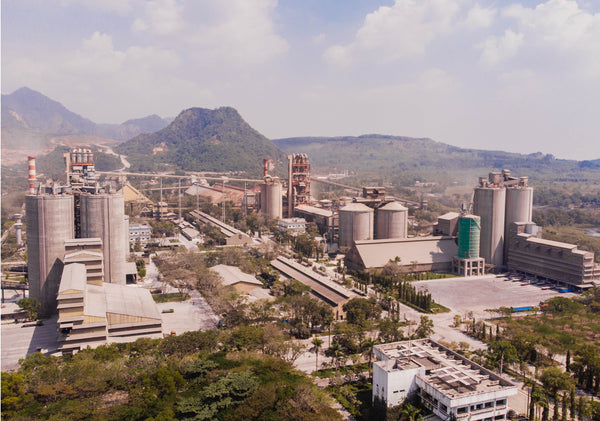
Cement plant, on Java, Indonesia
Partner for the incineration of non-recyclable plastic waste for energy recovery
A large part of the plastic waste collected by GOT BAG Indonesia consists of non-recyclable composite materials. Many plastic parts are also too heavily damaged by sun and salt water to be mechanically recycled. Many of the plastic materials are therefore not of sufficient quality or can only be recycled with disproportionate effort. Currently, we pass these materials on for thermal recovery, where they are used as an alternative to fossil fuels for energy generation.
Yarn spinning mill, near Taipei, Taiwan
Yarn production for RE:PET
In our partner's spinning mill, we produce so-called filament yarn from the rPET pellets. The base yarn is 300 denier, which means that a 9,000-meter long thread weighs 300 grams. The yarn is extruded almost endlessly from the melted PET. After extrusion, the yarn is stretched to be strong enough for subsequent weaving. For black fabrics, we already dye the yarn during extrusion – this dyeing process requires neither water nor solvents. Additionally, the spin-dyed yarn has extremely high color fastness.
Certificates: Ocean Bound Plastic, Global Recycled Standard
Weaving mill, near Taipei, Taiwan
Weaving, dyeing and coating of the RE:PET and RE:NYNET material
The yarn is woven into a particularly robust 600D or a lighter 300D Oxford fabric in a weaving mill. For this, the best yarn qualities (AA) are selected for the warp yarn, as the requirements for tensile strength are highest with dense weaving. All black products are generally spin-dyed. This means that black color pigments are added to the yarn during spinning. This eliminates the usual wet dyeing process. For all non-black products, we dye the textile directly after weaving with disperse dyes in a nearby dye works. We avoid dyes and additives that are on a restricted substances list (e.g., from Oeko-Tex, Bluesign or ZDHC). After dyeing, the fabrics – for waterproof welding – are coated on the back with a thin TPU layer of approximately 0.15 mm. A very thin, durable water-repellent PU coating is applied to the outside of the fabric.
All fabrics for sewn products receive only a thin waterproof PU layer on the back and a PFC-free DWR coating on the outside.
Certificates: ISO 45001:2018, ISO 14001:2015, ISO 9001:2015, Global Recycled Standard, bluesign System Partner
Cut, Make, Trim in Jepara, Indonesia
Cutting and welding of RE:PET products
For our waterproof products, we use the process of high-frequency welding. In high-frequency welding, the materials are cut to size beforehand and then welded in high-frequency machines using specially made molds. During this process, the TPU material is melted at the weld seams – and only there – with an alternating electromagnetic field of approximately 27 MHz and joined together by the pressure of a press. The seams are then 100% waterproof and very durable.
Our products do not consist exclusively of the main material – additional product-specific accessories such as buckles, zippers, straps, foams and tapes are added. As far as possible, these components are made from recycled materials, although some of them are not yet available on the market.
Certificate: Recycled Claim Standard
Cut, Make, Trim in the Ho Chi Minh City region, Vietnam
Cutting and sewing of our sewn RE:PET and RE:NYNET products
For sewn products, we use fabrics without TPU coating. The cut fabric parts are sewn and bar-tacked using special sewing machines for backpacks. We exclusively manufacture sewn products in the Ho Chi Minh City region in Vietnam.
Our products do not consist exclusively of the main fabric – additional product-specific accessories such as buckles, zippers, straps, foams and tapes are added. As far as possible, these components consist of recycled materials, although some are not yet available on the market.
Certificates: Global Recycled Standard, Recycled Claim Standard, FairWear-audited, ISO 9001:2015
Sunglasses production in the Zhejiang region, China
Production of RE:SHADES
Our recycling partner supplies the RE:PC, which is used for the frames of our RE:SHADES. Additional components, such as lenses made from recycled industrial polycarbonate.
Certificates: Global Recycled Standard
Suitcase production in the Jakarta region, Indonesia
Production of the RE:SHELL suitcases
Our recycling partner supplies the RE:PC material used for the hard shells of our RE:SHELL suitcases. The shells are shaped using a vacuum thermoforming process. Additional components are purchased and assembled to complete the production process of the suitcases.
Certificates: Global Recycled Standard
Warehouse for shipping products in Europe
in Bischofsheim, Germany
Warehouse for delivery to the United States
in Portland, North America
Headquarters
in Mainz, Germany
Over 70 employees are part of the GOT BAG team in Germany. Since its founding, our office has been located in Mainz, the state capital of Rhineland-Palatinate.
Office USA
in Keizer, Oregon
Our team in the USA is located in Keizer, Oregon.


