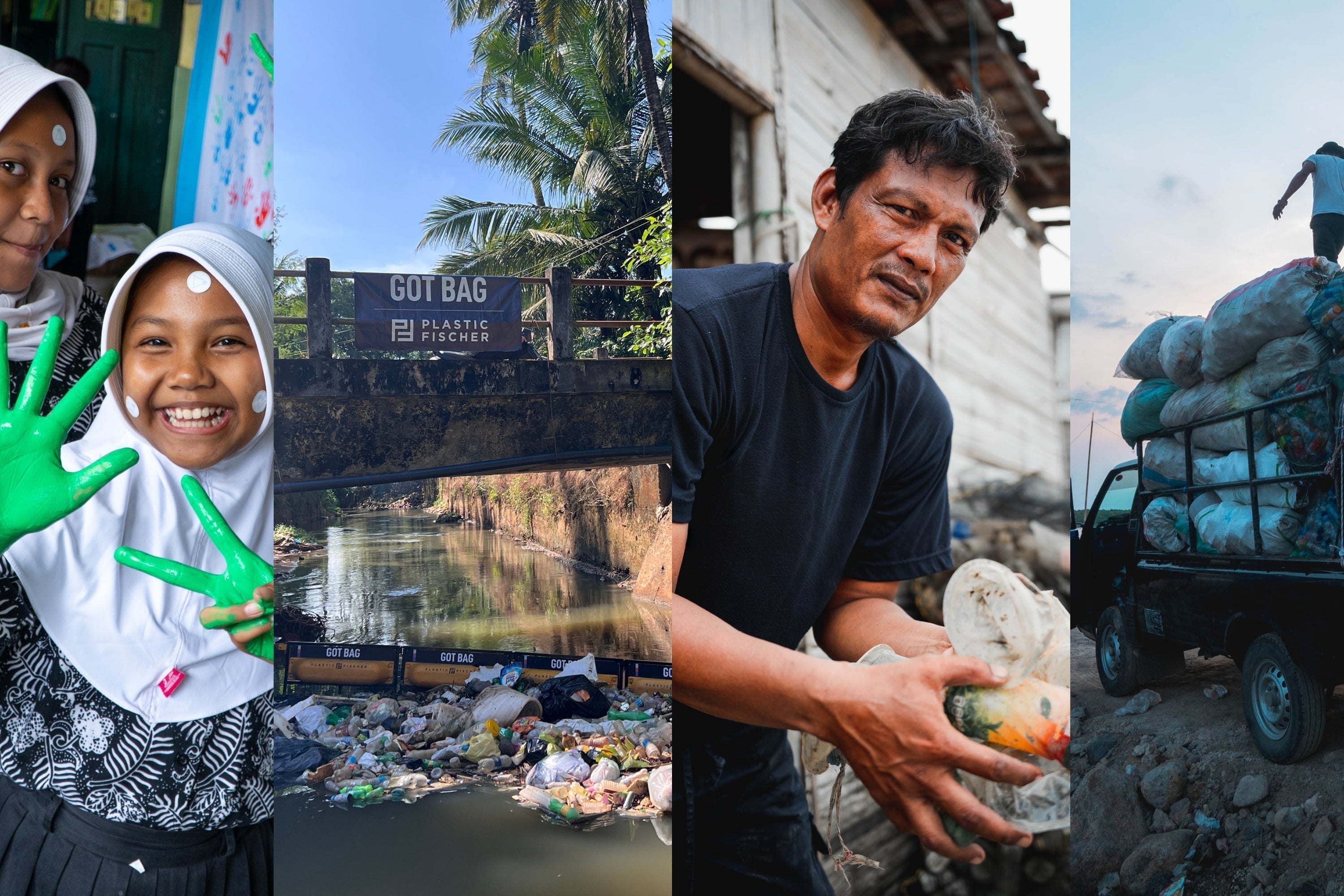
In the interview, Aen and Talitha, the two Education Officers of GOT BAG Indonesia, talk about their daily work, their most rewarding successes, and their hope for a future in which young people can become ambassadors of change.
Why does GOT BAG Indonesia focus on environmental education for young people, and what impact do you hope to achieve?
Aen: Got Bag Indonesia believes that the future of our environment is in the hands of the younger generation. For this reason, we dedicate our efforts to environmental education. By fostering awareness and understanding from an early age, we aim to create agents of change who not only practice a sustainable lifestyle but also inspire and mobilize those around them to participate in protecting the environment.
What does it mean for you personally to be part of this initiative?
Talitha: I want to leave at least one good deed for this Earth. We have taken a lot from Mother Earth, but sometimes we just left traces without kindness. I believe that one small step of kindness will lead to significant positive change.
How many schools in Java have participated in your program so far?
Aen: From 2024 to the present, there have been 13 schools running this Education Program, with details: 6 schools in the Demak and Jepara Regions, and 7 schools in the Jogja Region.
How do you design the lesson materials so that children not only understand but also truly internalize the problem of plastic pollution?
Talitha: We observe their environment, provide direct examples of the conditions around them, and use an approach tailored to the characteristics of each school.
What reaction do you see from the children when they first understand the scale of the waste problem? Are there any stories that are particularly memorable for you?
Aen: When the children are asked to think and imagine how the waste they produce turns out to have a large negative impact, they are shocked and only then begin to truly realize the consequences. For example, when I explain how plastic waste turns into microplastics, breaks down in the ocean, is absorbed by fish, and those fish are eaten by us, they are shocked and horrified by it. They become aware that waste that is not managed properly can pose serious risks to their own health. After providing waste bins, I also saw firsthand that the children began to consciously and actively sort waste at school according to its type.
What tangible behavioral changes have you observed in children after they followed your education program?
Talitha: The children are starting to be able to sort waste according to its type and can take responsibility for the waste they produce. This can be seen when I visit schools; the waste inside the classrooms is starting to be sorted, although when I look at the large bins, the sorting process is not always perfect yet.
What has been the response from families and the surrounding community to your education program?
Aen: They have welcomed this program positively. Based on the education program satisfaction survey filled out by teachers, they feel this program helps raise students' awareness of waste issues in their surrounding environment and how to manage waste wisely. The children are also more enthusiastic about sorting waste by type. Additionally, there was a local hamlet representative who said they hope this education program can continue and reach more places.
Talitha: According to the community, especially the KSMs (Community Self-Reliance Groups) partnered with YGBI (Got Bag Indonesia Foundation), they are motivated and want to continue these educational outreach activities in schools to nominate their schools to become adiwiyata schools (green schools).
What are your next steps or plans?
Talitha: We have plans to create an Eco-Club as an extracurricular activity in schools and are also planning 6 events in 2026.
What are your hopes for the future of the GOT BAG Indonesia education program?
Aen: I hope that with this environmental education program, more young people will become aware of environmental issues and make it a habit to manage the waste they produce from an early age. This habituation is expected to become a culture and reach more people in the future. The younger generation has great potential and a strategic role in shaping a new, more environmentally conscious culture in the time to come.
About Aen:
Aen Hendrawati has been an Education Officer at GOT BAG Indonesia since July 2024. She graduated in Aquatic Resources Management from Diponegoro University and has worked in various environmental and conservation roles. She is passionate about education, biodiversity, and protecting the environment.
About Talitha:
Talitha Kineta has been an Education Officer at GOT BAG Indonesia since January 2025. She graduated in Marine Science from Diponegoro University and gained experience through various roles, including as an Entry Data Clerk, HR Personnel Clerk, and an intern in aquaculture. Talitha is passionate about ocean conservation and education, and is dedicated to contributing meaningfully to the preservation of nature.